

Canada's First National Security VC | Glenn Cowan — Explorer Spotlight #3
The former special operations commander behind ONE9, backing Canadian defence before it was fashionable.

ONE9 is Canada’s first national security venture capital firm. It was founded in 2013 by Glenn Cowan, a former JTF 2 (Joint Task Force 2) Squadron Commander in Canada’s special forces. In 2025, ONE9’s venture capital business was acquired by Kensington Capital Partners as its dedicated security and investment platform.
The firm has been operating in Canada’s national interest long before it was mainstream, at a time when investing in defence companies was still heavily restricted across Canada’s venture market. Now, amid an influx of defence funding and geopolitical shifts, ONE9 represents deep expertise in an industry undergoing massive transformation.
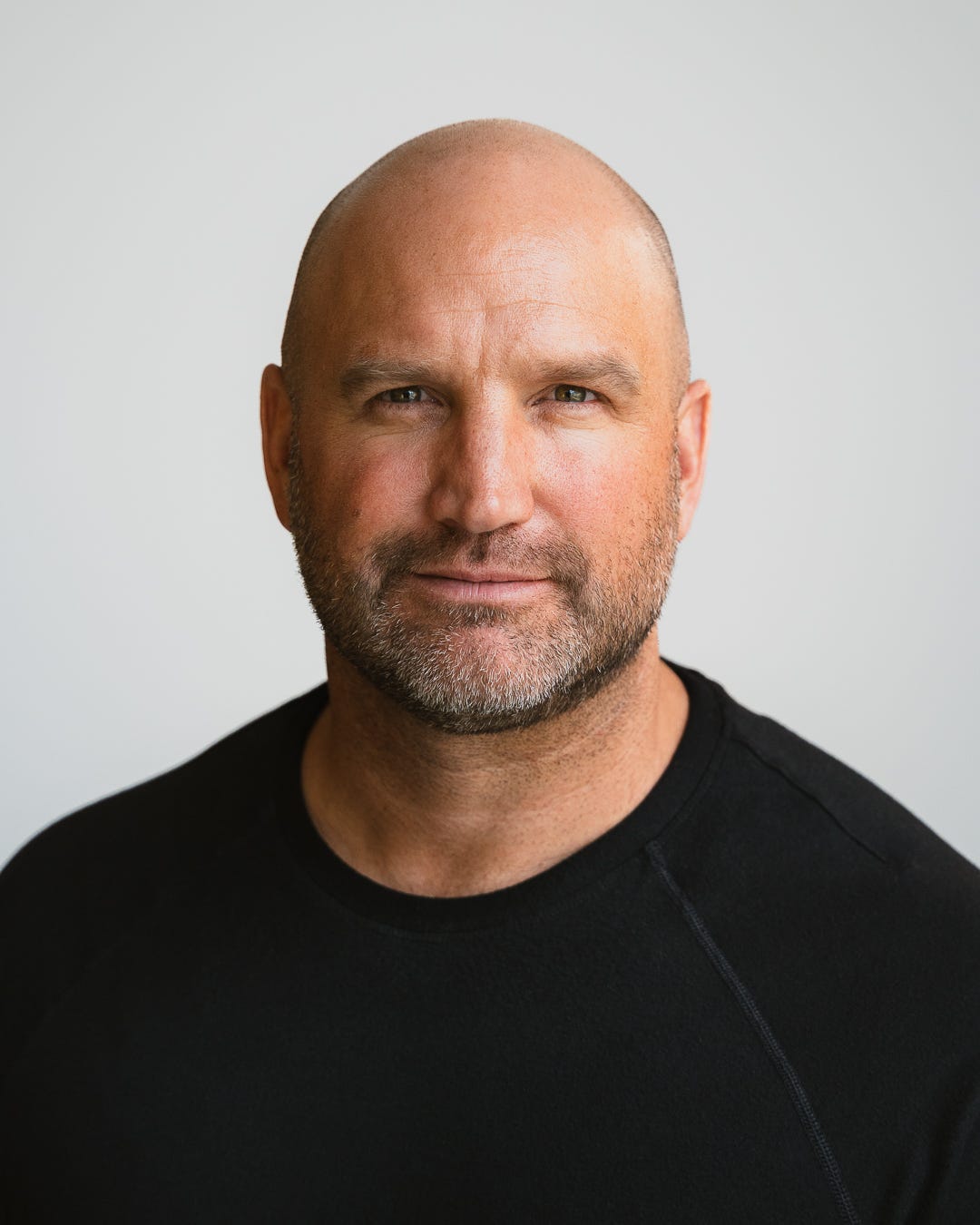
Glenn’s view is blunt: founders need customer discovery, investors need domain expertise, and Canada needs to stop playing small.
What is ONE9 building, and why does Canada need it?
“ONE9 is building Canada’s only thematic innovation and investment platform focused on early-stage national security technologies.
We need it because Canada has not traditionally had any funding mechanisms for early-stage companies that want to sell and build in the defence space. Obviously, we’re seeing some of that change, but Canada’s got a lot of talent. We have a requirement to build capable, lethal, relevant, and world-class defence capabilities.”
How does your special operations background shape how you evaluate founders?
“The most direct correlation in how I evaluate founders is the same way I would have evaluated leaders in a special operations community. In my last job in the military, I was the chief instructor at a national mission unit/special forces unit. I ran all the selections, and it was my job to run the leadership courses and select the next generation of leaders. I take a lot of the approaches and thought process and experience from screening leaders, looking at building high-performance teams, and I apply that through the lens that I look at founders with.”
What traits does a founder need to succeed in this market?
“I like audacity, bias for action, and big thinking.”
What does a Canadian startup need to understand before it tries to sell into government or allied markets?
“What we advise and shape our portfolio with is customer discovery. You have to know your customer, understand how to get in front of the customer, and really not just try to sell your tech to them, but understand how a defence end-user actually builds a capability. I think there’s a lot more education that’s needed in terms of working to build a defence tech company in the same way that a military is going to build a force employment concept, and ultimately field the types of technologies.
We’re often seeing people doing it a little bit backwards from how the military thinks. They’re starting with a piece of tech being like, “Oh, this is awesome. I’m going to sell it to the military,” as opposed to saying, “I’m going to work with the customer, really understand the customer, and work backwards through the same sort of process that they innovate and build capability, and then I’ll arrive at the tech. Then we’ll build the tech.” The widget is less important than delivering the effect that the customer is trying to deliver. Militaries want to see effects-based capabilities delivering tangible effects in a specific time and place to yield a specific result. That’s how militaries think. If your company and technology can’t do that, then you need to understand the path to get it there. That’s where I would say customer discovery is more important than the technology you’re trying to build.”


Should dual-use build for defence first?
“I truly do believe that it can go both ways. I am a huge fan of going defence first, whether or not you’re even going to sell to defence. I think it’s important to validate your tech in a defence context. Special operations and a good defence customer are so far ahead of the civilian market in terms of leading indicators and trends of where future innovation and future capability development are happening. They’re literally looking at 30-year horizon scans for things that, if they briefed now, would seem like it’s ridiculous, we’re never going to use that, but 30 years from now, we might. While I’m not suggesting that’s the timeline of a company’s cycle of tech, thinking along the lines of what’s the next thing that militaries are going to need, validate it and ensure it works in that context. Then, if you want to channel it for a commercial application first, I think that’s okay if you can make it work.
Where I think dual-use is dangerous is that so often I hear dual-use means we can sell to both, which is true, but it’s really important to understand the scale of the company and where they’re at in their journey. I tell early-stage companies, pick one and go after it with ruthless precision and discipline. When I did selection for the special forces, I had this motivational poster ingrained in my brain, and it said, “If you chase two rabbits, both will escape.” That burned in my brain. I see dual-use as chasing two rabbits, and if you’re doing it early in a company’s journey, it’s very difficult because there are different investor tolerances, you need different skill sets on the team, you’re going to have a different go-to-market, you’re going to have a different business development function, and you might need a heavier reliance on a government relations function. Pick one and just go after it, and then have a natural, logical, and well-thought-out pivot point when you expand into the other vertical.
Most of these comments are through the lens of pretty early-stage companies, or companies that are brand new to defence. I would articulate them to be very precise in landing that first foothold.”
What's a view that you hold about Canadian defence that most other investors would disagree with?
“It’s a great question, and it’s a moving target because that same question this time last year, I would have said that Canada doesn’t really have a market. We’re seeing this awakening of this defence moment in Canada, which is not new to Canada. We have done this before. Yet Canada played small, and it appears that sentiment is shifting. Canada is playing with the intention of really re-emerging as a sizable, credible, impactful, and relevant country, and a foundational backbone of that is a strong Canadian Armed Forces. Investors and the world are waking up, and they’re like, “Oh, Canada’s a market now.” And it’s a big market. We’re a G7 country that has been playing like we’re a small two-bit player. When Canada decides to turn its mind to something and to get involved and to back something, I find we do it very aggressively. Sometimes it takes time to get there, but it looks like we’re here now.
I’m a bit contrarian, and there are a lot of people who are going to lose money in defence because they’re going to jump on some hype cycle bandwagon and they don’t understand the customer discovery. They don’t understand how militaries think and build. They’re going to try to capitalize on the momentum of this hype that we’re seeing in defence, and they’re just going to throw money after shitty companies that will never sell to a customer. I think investors who don’t have domain expertise in the sector should be investing through someone who does.”


What is the most interesting niche you are looking at?
“I’m really interested in watching these partnerships of necessity form across relevant geographies that are going to be impactful to Canada. I’m watching very closely how the military commitment in Latvia, which is an underappreciated deployment of Canadian forces, is a Canadian bet on the front lines of a very fragile environment. I don’t think we quite appreciate that. We’re going to need to reinforce the 3,500 Canadians that we’ve got on the Russian border, and we’re going to need to push tech, kit, capability, equipment and decentralized decision-making to that group because if that thing kicks off, it’s going to happen real fast. They’re going to be exposed if we don’t arm them, equip them and prepare that group accordingly. The subsequent geography is: follow the Baltic up, we’re seeing a lot with the Nordics, so the Baltic-Nordic alignment. There’s natural alignment with the Canadian Arctic.
We built Sapujjijiit, which is our Inuit defence company out of Iqaluit, to really start to channel tech transfer into these new frontier markets where there is a dual-use application. There are a bunch of other relevant stakeholders, but defence and security are a really underpinning aspect to that geography.
From a technology perspective, we’re very excited, and we’re very heavily invested in counter-UAS. I think that’s a big trend. You have to understand how a customer is going to build a defensive infrastructure. It’s going to be a layered defence. It’s going to have multiple systems, multiple sensors. There’s going to be lots of different options to build out that macro capability of counter-UAS, vital point security or critical infrastructure protection. Understanding how those tech stacks bleed together and how relevant partnerships need to form to create a capability of disparate technologies that are owned by different groupings working together.”
What do the next 12 months look like for ONE9, given the hype in the Canadian market?
“We are growing both arms of our business rapidly. We’re raising a sizable venture fund. I can’t say too much about that, but it’s coming. Not fast enough, but it’s coming.
We’re going to be growing our Capability Labs business. We’re going to be looking to really aggressively support deployment of capital into companies, and then through our Capability Labs business, really aggressively do what we can to create value for the companies that we think are going to be the winners. We’ve got great access to customers. We understand the customer. We can start integrating. We can do a lot of privatized force development through ONE9 Capability Labs. We can test and validate. We can get it in front of customers where there’s a high barrier of entry to that customer. You don’t just walk up to a special forces unit and start asking, “Hey, what are you guys doing? What are you building? What do you need? Where are you guys weak? What are your vulnerabilities?” We have a pretty good handle on that, not just in Canada but with our American counterparts and our British counterparts as well.
When we see the technologies that we think are going to provide solutions for them, I think we have a fairly good roadmap and playbook to channel that right into that customer and get their eyes on it. Get stuff into the hands of these folks that are out there doing the missions. Then do what we can to iterate the feedback loop as quickly as we can so that those companies can course-correct early and cheaply to maximize value for the customer.”
What is one other Canadian national-interest startup that is worth watching?
“North Vector Dynamics. Those guys are going to crush it. The counter-UAS market, I think we’re in the first batter of the first inning of just what is about to unfold with robot wars and drone wars and swarm and all kinds of stuff. I love North Vector because it’s going to play a critical role in layered defence. They’re looking at a problem that’s here and now: drones, and shooting missiles at drones to take them out inexpensively. They’ve solved the cost asymmetry problem, which is the big macro issue in conflict, or one of them.
They’re also approaching it from the other end of the spectrum, looking at that audacious vision of what’s the next thing. The next thing is, how do we take out hypersonics? They’re building counter-hypersonic capability in parallel. They’re moving at different speeds, and there are different time horizons, but they’re hitting the full spectrum of defensive missile capabilities. Canada does not have what’s being called neo-primes. Canada doesn’t have organic companies doing this, so it’s a complete green field.
North Vector Dynamics and Dominion Dynamics are two that I would be watching very closely.”
Paul Ziadé: The Future of Canada's Air Defence

In Chapter One of Canadian Explorers, I sit down with Paul Ziadé to discuss developing a Canadian neo-prime, sovereign capability, startups, and what it means for Canada to start building again.
Building highly exportable technologies
“The other thing I like about North Vector is that they’re building a capability that the Canadian government should be buying and exporting.
I’m a firm believer that the government should not be giving four billion dollars to the Ukrainian government. We should be giving them four million counter-UAS missiles. If we’re going to donate or fund it, let’s keep that money in Canada. Let’s give that to Canadian companies like North Vector, and let’s donate interceptors as opposed to saying here’s a blank check, go do what you want. I look at North Vector, and I see it as a highly relevant, highly exportable Canadian solution that we can push into some of these increasingly challenging areas, like the Baltic / Eastern Europe drone wall that’s being built right now. It’s going to need massive counter-UAS. Middle East, our UAE partners, our Gulf partners, need massive counter-UAS.
China hasn’t even entered the equation yet, but the scale of its drone production puts us all to shame. Things are going to get hairy, man. We’ve got to be prepared. So I love North Vector.
My understanding is that Sentinel R&D is partnering with Airlogix. These are my words, not theirs, but professionalizing the supply chain that’s being built in Ukraine, making the supply chain relevant, domestic manufacturing, using some of her processes and composites. She’s selling to the Government of Canada, who are giving it to the Ukrainians. I think it’s a great playbook.”
Why build in Canada?
“Canada is a great country capable of great feats. We have thought small, so I think there’s a real opportunity where there’s a greenfield market because we have traditionally thought small. We are now seeing some scale, impetus and signal that we’re open for business. The cliche answer would be, "We have great talent.” Sure, we do have great talent. But the reality is, there are so many gaps in the Canadian market because we’ve just ignored it or relied on the United States or other partners to provide it for us.
There’s now accountability and agency over our own military and security systems. It’s a greenfield, go grab it.”
If you’re building something in Canada, I want to hear about it. contact@ethanmarcoux.com
30 Startups for a Sovereign Canada | Canadian30

Canada is recognizing the need for national sovereignty through hundreds of billions of dollars in generational investments, such as the Defence Industrial Strategy, the Canada Strong Fund, and its new National Artificial Intelligence Strategy. According to The Canadian Shield Institute, Canada's defence spending is projected to increase